


Why Most Kitchen Designs Fail Before They’re Even Built
- Aya Design in Style

- Apr 15
- 2 min read

Most people think a kitchen fails because of the finishes.
The wrong cabinetry colour.
A countertop that feels dated.
Lighting that doesn’t quite work.
But in reality, most kitchen designs fail much earlier, long before any material is chosen. They fail at the planning stage. Because a well-designed kitchen isn’t defined by how it looks.
It’s defined by how it works, and how it holds together as a space.
1. Layout Is Everything — And It’s Often Overlooked
One of the most common issues in kitchen design is poor spatial planning.

Islands that are too large for the room. Walkways that feel tight or awkward. Appliances positioned without considering how the space is actually used. These are not surface-level problems. They affect how a kitchen functions every single day.
A well-planned kitchen considers:
movement between key zones
how multiple people use the space
how the kitchen connects to surrounding areas
When this isn’t resolved early, no amount of beautiful finishes can fix it.
2. Proportion Defines the Space
Beyond layout, proportion is what gives a kitchen its sense of balance.

The height of cabinetry relative to the ceiling. The scale of an island within the room. The visual weight of materials and elements.
When proportion is right, the space feels calm and resolved. When it isn’t, something always feels slightly off, even if you can’t immediately explain why.
This is where design moves beyond decoration and into composition.
3. Storage Is Not About Quantity — It’s About Integration
Another common mistake is treating storage as an afterthought. Adding more cabinets does not necessarily improve a kitchen.

What matters is:
how storage is integrated
how easily it can be accessed
how it supports daily use
Hidden storage, in particular, plays an important role in more refined kitchens. It allows the space to remain visually calm, while still being highly functional. The goal is not to see everything. The goal is for everything to have its place.
4. Lighting Should Be Designed, Not Added
Lighting is often one of the last decisions made in a project, and it shows. A single overhead light or poorly placed downlights can flatten a space and reduce its impact.
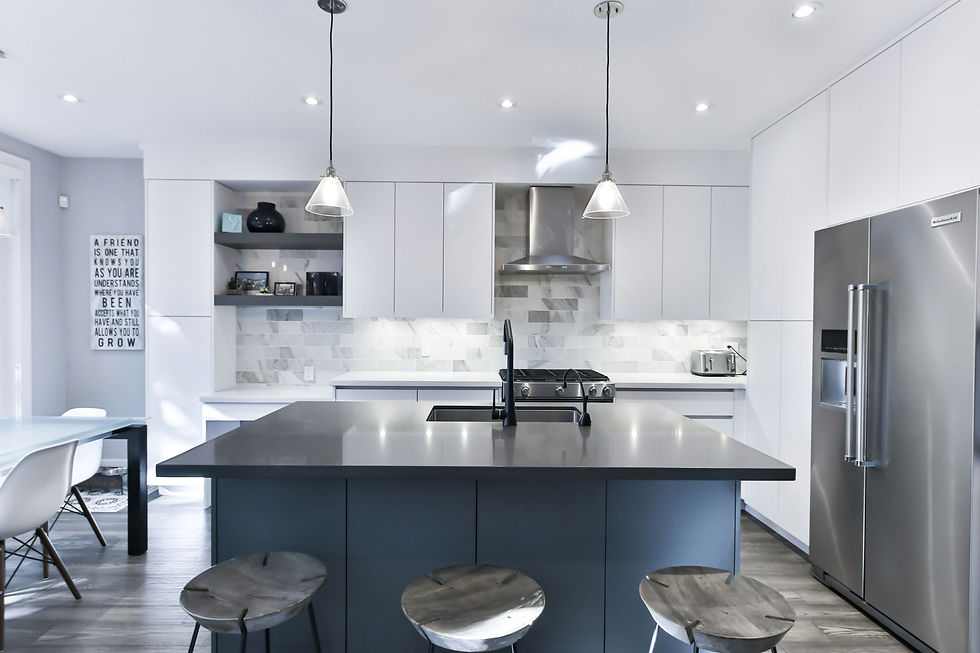
In more considered kitchens, lighting is layered:
functional lighting for preparation
ambient lighting to soften the space
statement lighting to define key areas
When done well, lighting doesn’t just illuminate the kitchen, it shapes how it is experienced.
5. The Details That Hold Everything Together

Finally, it’s the quieter details that define the quality of a kitchen.
The alignment of cabinetry. The consistency of materials. The way surfaces meet.
These are not the elements most people focus on, but they are what separate a good kitchen from a great one.
A More Considered Approach
At Aya Design In Style, we approach kitchen design as a complete system, not just a collection of finishes.
Every decision is made in relation to:
how the space is used
how it feels
and how all elements work together
Because the most successful kitchens are not the ones that try the hardest visually.
They are the ones that are resolved from the very beginning.


Comments